
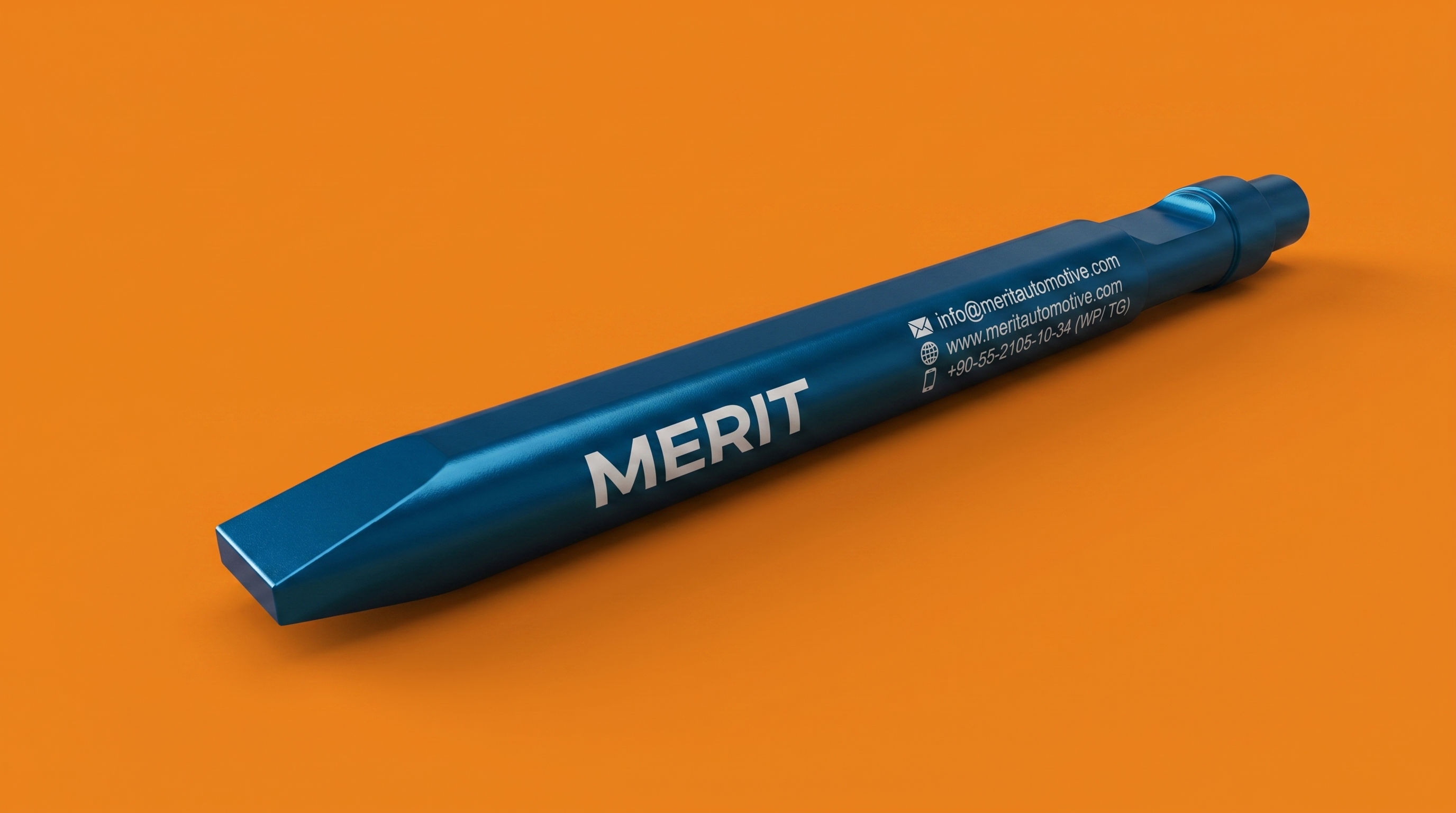

🛠️ THE MECHANICAL ROLE OF THE IN-LINE CHISEL
Every tool in a demolition setup functions as an energy transmitter. For the Cat B4 hydraulic system, the 542-1760 in-line chisel serves as the direct point of impact against rugged materials like asphalt, concrete slabs, and layered trench rock.
When your mini-excavator or backhoe triggers a cycle, high-pressure hydraulic oil drives the internal power piston downward at rapid frequencies. The kinetic energy from the piston transforms into a massive stress wave traveling straight down through the tool shaft. Because this specific profile focuses all that mechanical energy into a sharp, straight line rather than a single point, it behaves like a wedge—perfect for cutting straight tracks, freeing up utility lines, and slicing clean edges in roadwork.
📦 COMPONENT SPECIFICATIONS & DATASHEET
To ensure a seamless fit into your breaker chuck housing, compare your existing tool dimensions with our verified manufacturing layout:
| 🔍 Technical Metric | 📊 Specified Dimension & Tolerances |
|---|---|
| OEM Reference Number | 542-1760 / 5421760 |
| Hammer Model Fitment | Caterpillar B4 (Mini Excavator / Skid-Steer / Backhoe Class) |
| Working Blade Configuration | In-Line / Directional Cutting Edge |
| Tool Shaft Diameter (in / mm) | 2.1 in / 53 mm |
| Total Structural Length (in / mm) | 22.8 in / 580 mm |
| Total Assembly Weight (lb / kg) | 44.1 lb / 20 kg |
| Component Classification | Precision Replacement Demolition Attachment |
⚙️ METALLURGICAL INTELLIGENCE & MANUFACTURING
MERIT aftermarket tools are forged using strict thermal recipes to rival original equipment lifespan under severe field conditions.
- High-Elasticity Steel Selection: We utilize vacuum-degassed alloy steel enriched with chromium, nickel, and molybdenum (Cr−Ni−Mo). This unique recipe prevents micro-fractures from expanding through the core when working in cold climates or high-silica rock.
- Dual-Zone Thermal Treatment: The striking face—where the piston hits—receives deep-case carburization to reach a rigid surface hardness of 60–62 HRC. Meanwhile, the internal core remains tough and elastic to absorb continuous rebound shocks without snapping.
- Streamlined Cylindrical Finish: Precision-ground on automated centerless CNC tables, ensuring the shaft diameter maintains a flawless cylindrical truth to eliminate friction points within the tool bushings.
🚚 GLOBAL LOGISTICS & EXPEDITED TRANSIT
MERIT runs a highly coordinated, borderless distribution network focused on keeping heavy machinery active and reducing fleet downtime. We dispatch our equivalent premium line of 542-1760 work tools from global factory floors directly to your job site, yard, or aggregate quarry.
By partnering with international air-freight and priority overland freight channels, we clear customs barriers smoothly and deliver directly to your mechanics. From remote infrastructure grids to urban construction zones, our logistics network provides dependable shipping timelines to keep your operations moving forward.
⚠️ FIELD MAINTENANCE & BUSHING GUIDELINES
💡 Pro-Engineering Insight for Fleet Managers: Structural fatigue in breaker chisels is rarely caused by material defects; it is usually driven by internal tool tilt.
As the lower front bushing wears down, the clear gap between the tool shaft (2.1 in) and the bushing wall widens past factory limits. This allows the chisel to sit cocked or crooked inside the front head. When the piston strikes a tilted tool, it delivers a harsh, asymmetric blow. This creates intense bending stress across the steel shank, which quickly leads to blank-firing fractures or sudden shear failures right near the retainer pin slots.
- Grease Frequency: Force-pump a high-temperature, molybdenum-disulfide (MoS2) chisel paste into the front head every two hours of live operation to prevent dry binding and steel-on-steel galling.
- Bushing Inspection: Check clearances daily. If the lower bushing shows excessive play, swap it out immediately to protect your new replacement tool from premature stress failure.
Leave a Reply