
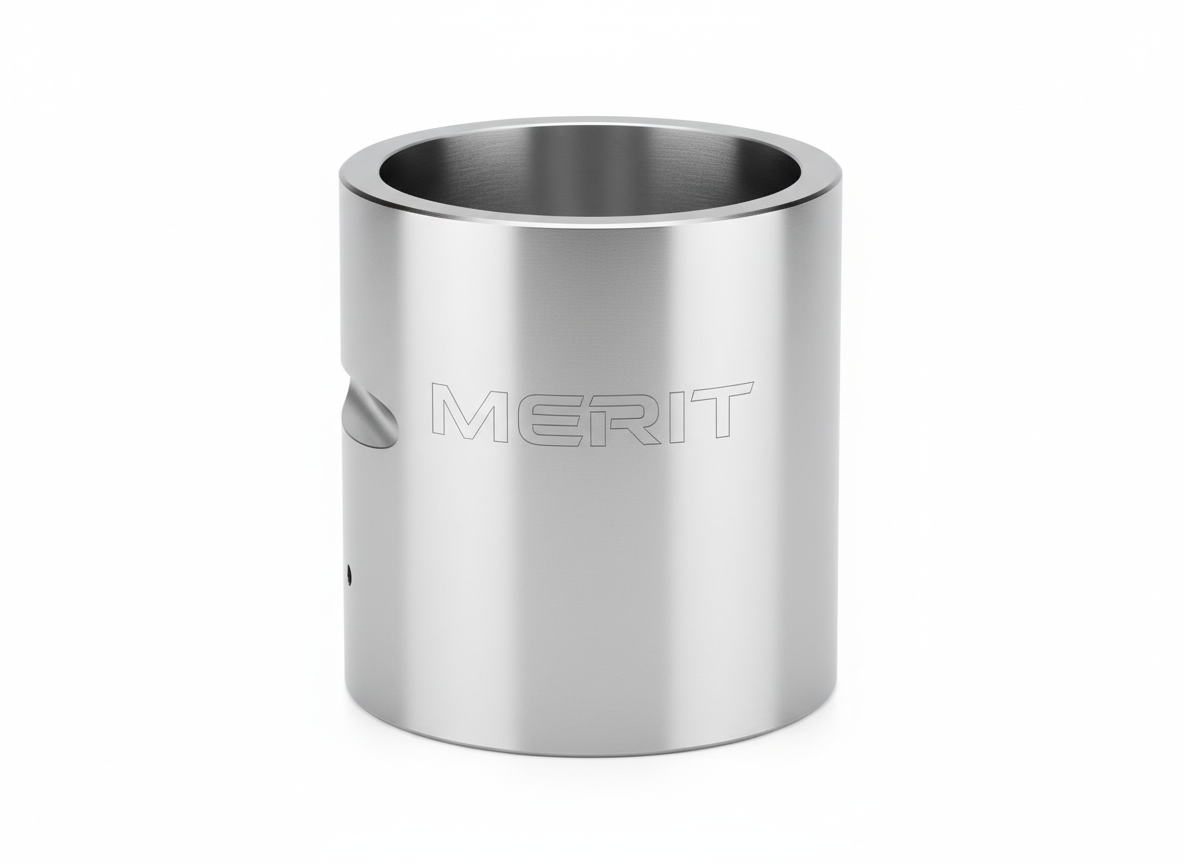

Protect the core of your Epiroc EC 150 hydraulic breaker with the Merit Lower Tool Bushing. As a primary wear part, the lower bushing is designed to be the sacrificial component that absorbs the intense friction and side loads during demolition. By maintaining a precision fit, the Merit bushing prevents expensive damage to the hammer’s front head and ensures the piston strikes the tool with perfect alignment.
Product Specifications
| Feature | Details |
|---|---|
| Product Name | Lower Tool Bushing / Lower Bushing |
| Part Number | 3363 0824 16 / 3363082416 |
| Compatible Model | Epiroc / Atlas Copco EC 150 |
| Material | High-Alloy Wear-Resistant Steel |
| Process | Precision Machining & Induction Hardening |
Why Choose the Merit Lower Bushing for the EC 150?
The Epiroc EC 150 is a powerhouse in the heavy-duty class. When the lower bushing wears beyond its limits, the tool begins to “wobble,” causing the piston to strike the chisel at an angle. Merit bushings are engineered to prevent this:
1. Extreme Abrasion Resistance
Our bushings are manufactured from high-alloy steel and subjected to a specialized heat-treatment process. This creates a surface that resists the “scouring” effect of rock dust and concrete debris, significantly extending the service life compared to standard aftermarket parts.
2. Optimized Lubrication Channels
The 3363 0824 16 bushing features internal grease grooves designed to match the Epiroc automatic lubrication system. This ensures that chisel paste is distributed evenly around the tool shank, reducing friction-generated heat and preventing “cold welding” or seizing.
3. Precision OEM Fitment
Every Merit bushing is machined to exact micron-level tolerances. This ensures a secure fit within the front head, preventing the bushing itself from moving or vibrating, which protects the housing from internal wear.
Maintenance Tip: When to Replace?
For the Epiroc EC 150, you should inspect the lower bushing every 50 operating hours:
- Measure the Clearance: If the gap between the tool (chisel) and the bushing exceeds 5mm to 8mm (refer to your specific service manual), the bushing must be replaced.
- The Danger of Delay: Running a breaker with a worn bushing leads to “piston scuffing,” where the piston scratches the cylinder walls. Replacing a bushing is a minor cost; replacing a piston and cylinder is a major overhaul.
- Pro Tip: Always replace the Upper Bushing and the Tool Retaining Pins when installing a new lower bushing to ensure the entire tool guide system is tight and aligned.
Leave a Reply